Gum Assessment
Gum disease assessment
Assessment reviews gum inflammation, bleeding, pocket depth, plaque and calculus, tooth mobility, recession, bone support, and personal risk factors.

Periodontics focuses on the prevention, diagnosis and treatment of gum disease and conditions affecting the tissues that support your teeth. Our periodontal care helps manage gum inflammation and infection, protect your natural teeth, regenerate diseased gums and bone and maintain healthy gums for long-term oral health.
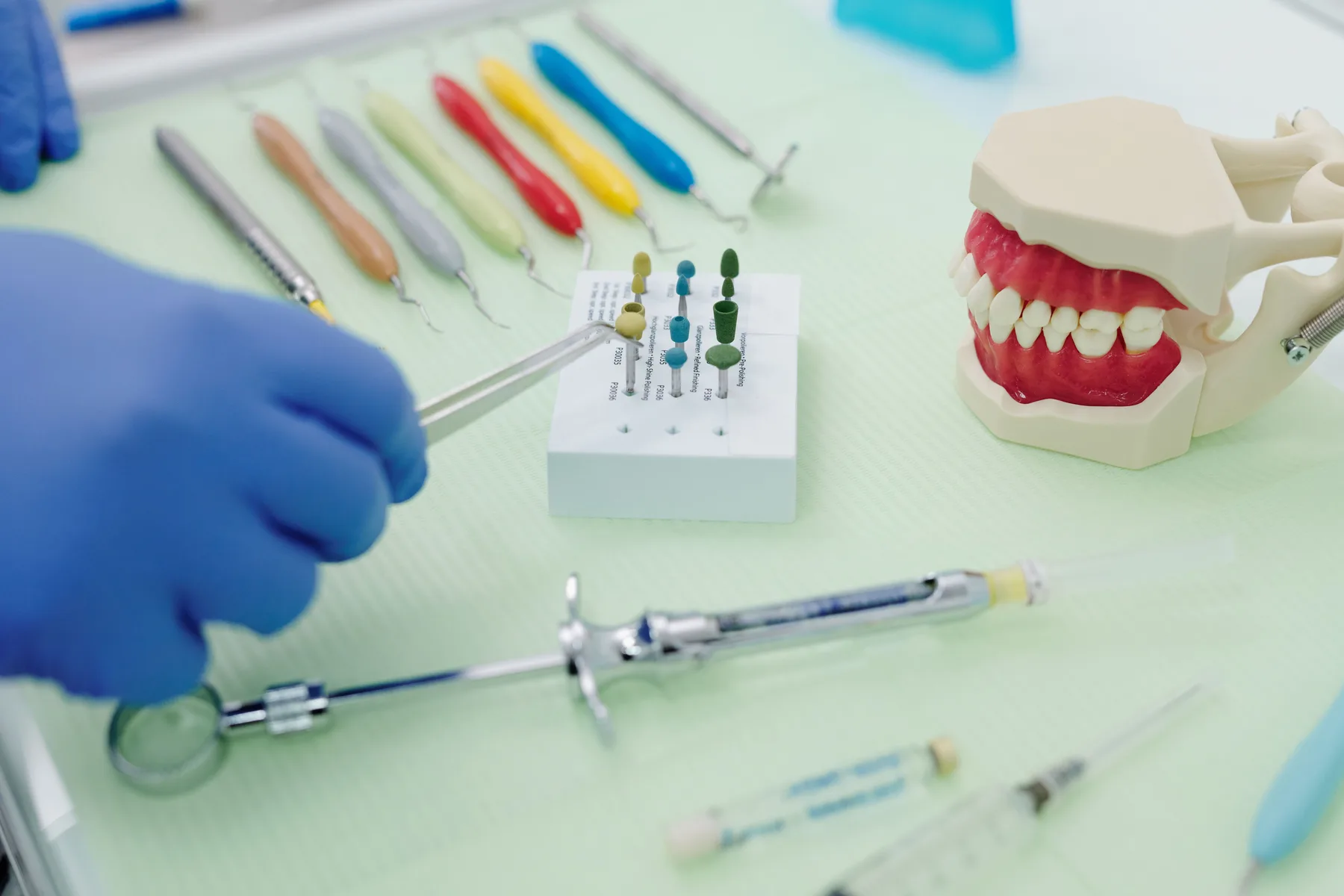
Gum disease assessment and periodontal maintenance planning.
Treatment is selected after assessing gum inflammation, infection risk, recession, bone support, tooth stability, and maintenance needs.
Assessment reviews gum inflammation, bleeding, pocket depth, plaque and calculus, tooth mobility, recession, bone support, and personal risk factors.
Maintenance visits support long-term gum stability after active treatment through monitoring, professional cleaning, and home-care review.
Scaling and root planing may be discussed when deeper cleaning below the gumline is needed to reduce irritants around affected teeth.
Gingivitis treatment focuses on early gum inflammation, professional cleaning, and oral hygiene habits before deeper support tissues are affected.
Periodontitis treatment is planned around gum pockets, infection control, bone support, tooth stability, and long-term maintenance needs.
Deep gum cleaning may be recommended when deposits and inflammation extend below the gumline and need targeted periodontal care.
Periodontal therapy can combine assessment, non-surgical cleaning, review visits, home-care guidance, and surgical discussion where suitable.
Bleeding or swollen gums are assessed to identify inflammation, cleaning challenges, infection risk, medical factors, or other causes needing review.
Gum recession treatment planning looks at exposed roots, sensitivity, brushing habits, gum thickness, tooth position, and whether grafting should be discussed.
Gum augmentation may be discussed for selected recession or soft-tissue concerns after assessing gum thickness, tooth support, and suitability.
Bone augmentation may be considered in selected cases where supporting bone defects or future treatment needs require surgical periodontal planning.
Common questions are answered during consultation, where gum condition, treatment suitability, maintenance, and surgical options can be discussed.
A gum disease assessment may be useful if your gums bleed, swell, feel tender, recede, trap food, or if a tooth feels loose or different when biting.
Scaling and root planing is usually discussed for deeper periodontal cleaning needs. The dentist will explain whether routine cleaning or deeper gum cleaning is more appropriate after assessment.
Gum recession treatment depends on the cause, amount of recession, gum thickness, sensitivity, tooth position, and whether non-surgical care or gum augmentation is suitable.
Maintenance is commonly discussed after active periodontal care because gum disease risk can return without ongoing cleaning, monitoring, and home-care support.
Periodontics consultation
Discuss bleeding gums, swollen gums, gum recession, deep cleaning, periodontal maintenance, and gum or bone augmentation with the dental team.