Structural support
Used where stronger support or projection is required, such as certain areas of the cheek, chin, or jawline.

Injectables and biostimulators
Dermal fillers are injectable aesthetic treatments used to restore or enhance specific areas of the face where there may be volume loss, structural deficiency, contour imbalance, or age-related changes.
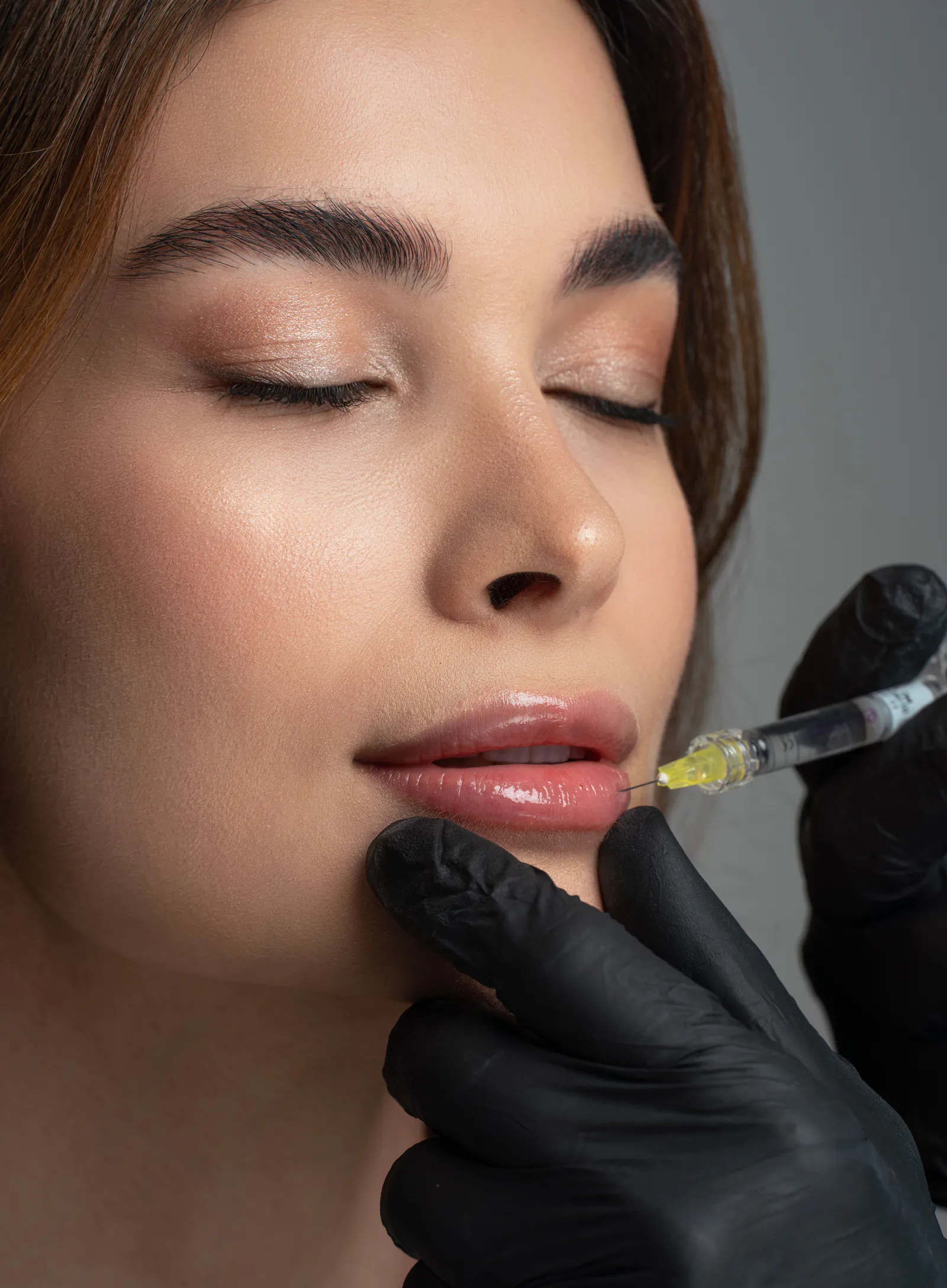
Dermal fillers are injectable aesthetic treatments used to restore or enhance specific areas of the face where there may be volume loss, structural deficiency, contour imbalance, or age-related changes.
At Inshin Clinic, dermal fillers are discussed within a doctor-led facial assessment, rather than as a simple "volume adding" treatment. The doctor first evaluates the patient's facial anatomy, proportions, skin quality, and underlying cause of the concern before determining whether filler is appropriate.
The objective is not necessarily to make an area larger. In many cases, carefully placed filler can be used to restore support, improve proportion, refine contours, or create a more balanced appearance.
Most modern facial dermal fillers are based on hyaluronic acid (HA), a substance naturally found in the body.
When injected into carefully selected areas, the filler can provide:
Depending on the product and treatment area, different filler characteristics can be selected to provide either support and projection or a softer, more subtle effect.
Dermal filler may be considered for a variety of concerns, depending on the patient's anatomy and clinical needs.
Areas commonly discussed include:
The appropriate treatment area depends on the individual. Not every area is suitable for filler, and some concerns may be better addressed through other treatment modalities.
One of the most important aspects of filler treatment is understanding where the problem actually comes from.
For example, a patient may feel that their nasolabial folds are becoming more prominent. Simply placing filler directly into the fold may not always be the most appropriate approach.
The underlying concern could involve:
In such cases, restoring appropriate support in another area may produce a more balanced result than simply filling the visible line.
This is why a proper facial assessment is important before deciding where filler should be placed.
Dermal fillers can be selected and placed according to different objectives.
Used where stronger support or projection is required, such as certain areas of the cheek, chin, or jawline.
Used to improve facial proportions and create more defined transitions between facial structures.
Used where a softer filler may be appropriate for selected lines, depressions, or areas requiring subtle correction.
The product, amount, injection depth, and technique should be selected according to the patient's anatomy and treatment objective.
Before recommending filler, the doctor will assess:
The doctor may also recommend not having filler if it is unlikely to provide a meaningful or natural improvement.
In some cases, the patient's concern may be better addressed with another treatment such as a biostimulator, energy-based treatment, skin treatment, or a combination approach.
Dermal filler generally provides an immediate visible effect, although the final appearance may change as initial swelling settles.
Depending on the treatment area and product used, patients may notice:
The goal should be appropriate correction rather than maximum correction.
A well-planned filler treatment should complement the patient's existing facial features rather than make the face appear obviously "filled."
The longevity of dermal filler varies depending on:
Some areas may retain filler longer than others. Therefore, patients should not be given a single guaranteed duration without considering the specific product and treatment area.
Dermal filler is a medical procedure and should only be performed following appropriate medical assessment.
Common short-term effects may include:
More serious complications, although uncommon, can occur with injectable treatments. These include vascular complications and tissue injury. Appropriate patient selection, anatomical knowledge, product selection, injection technique, and post-treatment monitoring are therefore important.
Patients should inform the doctor about previous aesthetic procedures, medical conditions, medications, allergies, and any previous complications before treatment.
At Inshin Clinic, dermal filler is approached as a facial-structure treatment rather than a product-driven procedure.
The consultation begins with the patient's concern and the underlying anatomy:
Only after this assessment is the doctor able to determine whether dermal filler is appropriate, which areas should be considered, and how much correction is actually necessary.
The philosophy is simple:
The goal is not to add as much filler as possible. The goal is to use the right amount, in the right place, for the right reason — while preserving natural facial proportions.
Consultation-first care
This site is structured around consultation capture rather than hard-selling a booking widget. That keeps the brand aligned with doctor-led clinical decision making across both medical aesthetics and dentistry.